The number the load board does not show you
A board shows the rate and the loaded miles. It does not show the 180 empty miles you drive to get to the shipper. Those miles burn fuel, hours and tires exactly like loaded ones — they simply do not pay.
Run the total-mile calculation
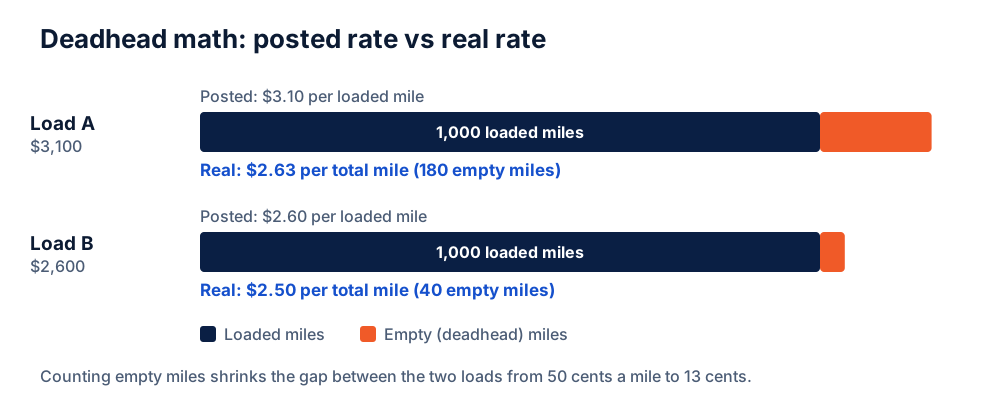
Take the linehaul, divide by loaded plus empty miles. A $3,100 load over 1,000 loaded miles reads as $3.10. Add 180 miles of deadhead and it is $2.63 on total miles. A $2,600 load with 40 miles of deadhead is $2.50. The gap is far narrower than the board implied.
Add the clock
Empty miles consume hours of service. Three hours of deadhead is three hours you cannot use on a paying load, and it can push a delivery past an appointment window, which costs again. Time is capacity, and capacity is revenue.
Then add the reload
The best load is the one that delivers into a market with density. A slightly lower rate into a strong reload market beats a higher rate into a dead one, every time, because the next load is where the loss actually happens.
How we plan against it
Deadhead percentage is on the weekly scorecard for every carrier we dispatch, and every load offer includes the empty miles to pickup. That way the total-mile rate is the one you approve.
This is the thinking behind route planning and truck dispatch — the same analysis, run for you every week instead of read about once.
It applies hardest to dry van freight and hotshot freight, where the margin is thin enough that the arithmetic decides the week.
Want this applied to your trucks instead of read about? Our dispatchers run this analysis on every account, every week. Book a free audit and we will run it on your last ten loads.