Reload density beats headline rate
A $2.60 load into Chicago usually beats a $2.85 into a market with nothing coming out. Dry van has the deepest reload pool in freight, and using that is the whole game.
Dry Van dispatch
The backbone of freight. Consistent volume, tight margins — which is exactly why negotiation and deadhead control decide profitability.
The short answer
Dry van dispatch is won on reload density, not headline rate. A lower-paying load into a market with freight coming out beats a higher-paying load into a dead one. MSM Transit scores every destination on what comes back out, screens for drop-and-hook programmes, and prices detention risk before accepting.
Who we dispatch: Dry Van, Reefer, Flatbed, Step Deck, Conestoga, Power Only, Hotshot, Box Truck, RGN / Lowboy and Heavy Haul — every rig longer than 26 ft, new authorities included. Not a fit: sprinter vans, cargo vans and 16 ft box trucks.
What we handle
Every equipment type has a handful of factors that separate a profitable load from a bad one. These are the ones we screen before a load reaches you.
Typical market range
Where a specific load lands inside that range is decided by the things above: the lane, the season, the reload, and who is negotiating. Check a specific lane, or send us the load.
An estimate to orient you, not a quote and not a promise.
What moves a dry van rate
Generic dispatch treats every trailer the same. These are the dry van-specific factors we argue on, load by load.
A $2.60 load into Chicago usually beats a $2.85 into a market with nothing coming out. Dry van has the deepest reload pool in freight, and using that is the whole game.
Live loads can cost three hours at each end. Two live stops can quietly halve a good day. We screen for drop programs and price detention risk into the rate before accepting.
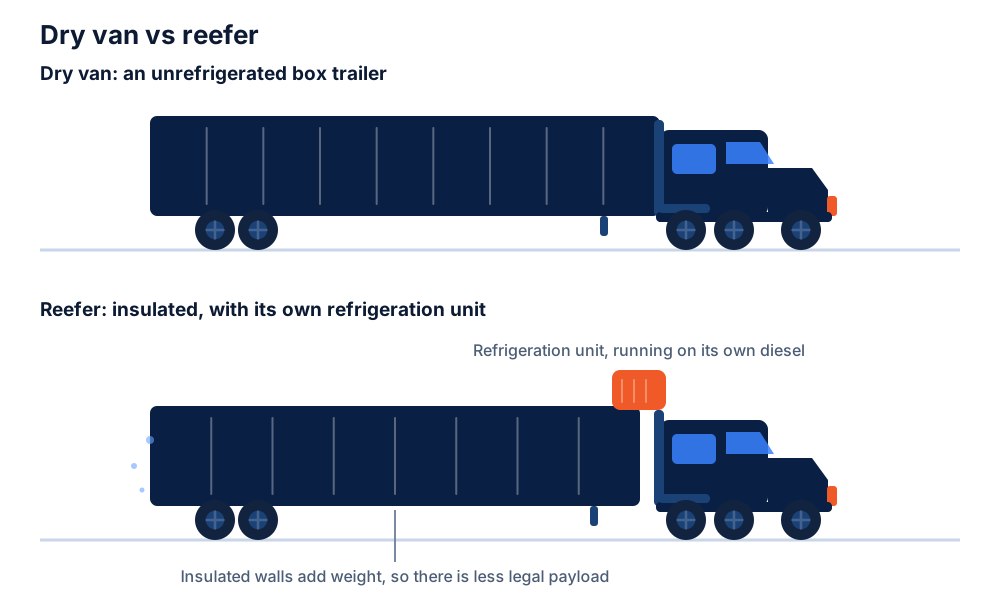
Paper, beverage and canned goods hit weight limits long before they fill the trailer; consumer goods do the opposite. Knowing which you are hauling changes what you can legally add.
Representative corridors for this equipment — the kind of lanes a strategy for it is built around.
Peaks late August through November as retail builds inventory for the holidays; softest in the weeks after Chinese New Year, when import volume dips.
What we watch for on dry van loads: Brokers padding transit times to hide an appointment they cannot actually get. Confirm the delivery appointment in writing before accepting, not after.
Services applied
The same services every carrier gets — but these three are the ones that decide a dry van account.
We pair this with dry van because reload density, not headline rate, is what decides a dry van week.
How it worksWe pair this with dry van to keep the board worked while you drive.
How it worksWe pair this with dry van so detention on a live load is billed, not absorbed.
How it worksWorth reading alongside this: Deadhead math: why a $3.10 load can pay less than a $2.60 load.
Dry van vs reefer: which is more profitable for an owner operator? · How do detention and layover pay work in trucking?
60-second request
Tell us where you run. We will send the current booked ranges for your lanes.
Other equipment
Running more than one trailer type is normal. One account, one dispatcher, one invoice — with the right playbook applied to each truck.
Terms
The same terms for every equipment type. Compare them line by line with any dispatcher you are considering.
| MSM Transit | |
|---|---|
| How you are charged | A percentage of gross on the loads we book, quoted for your operation in writing before you sign |
| Accessorials | Not commissioned. Detention, layover, TONU and other accessorial pay is yours |
| Setup fee | None |
| Monthly minimum | None. If your truck does not run in a week, that week is not billed |
| Loads you find yourself | Not billed |
| Contract | Week to week; either side can end it with 15 days written notice |
| Forced dispatch | Never. You approve every load before it is booked |
| Your broker relationships | Stay yours, including if you leave |
| Trucks per dispatcher | No more than 4 |
| Hours | Desk staffed 24/7, including nights, weekends and holidays |
| Reporting | A written scorecard every week |
| Authority | We work under your operating authority. We are not a broker and not a carrier |
| Equipment and size | Dry Van, Reefer, Flatbed, Step Deck, Conestoga, Power Only, Hotshot, Box Truck, RGN / Lowboy and Heavy Haul, every rig longer than 26 ft |
| New authorities | Welcome, on the same size rule |
| Not a fit | Sprinter vans, cargo vans and 16 ft box trucks |
| Coverage | All 48 US states and all 10 Canadian provinces |
The percentage itself is quoted for your operation, in writing, before you sign.
Free dispatch audit
Send your last 10 dry van loads. We will show you the rate we would have negotiated on each one, and where brokers padding transit times to hide an appointment they ca…
60-second request
Tell us what you run. A dispatcher — not a call center — responds within one business hour with a rate strategy for your lanes.