Where the reefer premium comes from
Reefer freight — produce, meat, dairy, frozen food, pharmaceuticals — has to be held at a set temperature, which needs more expensive equipment and more care. Fewer trucks can take it, so it pays more. The market ranges on our reefer and dry van pages show the gap; they are estimates to orient you, not quotes.
Where the premium goes
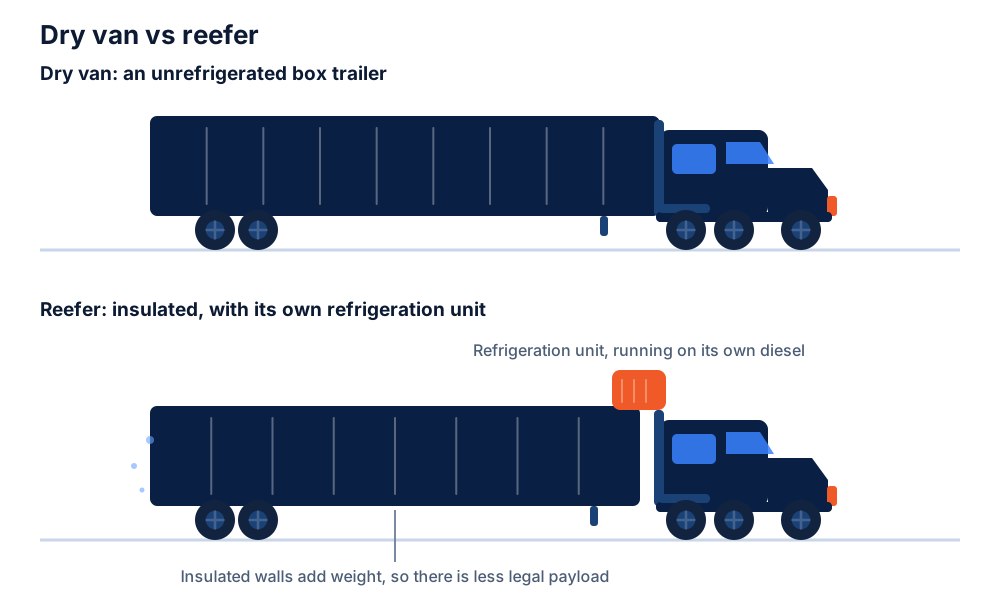
The refrigeration unit runs on its own diesel, by the hour, whether the truck is moving or parked at a dock. It needs its own servicing, and it can fail. The trailer costs more and its insulation adds weight. Claims are the hidden cost: a load delivered out of temperature can be rejected entirely. Add those up honestly before comparing a reefer rate with a van rate — the gross gap and the net gap are different numbers.
Food-safety rules apply to the carrier
The FDA’s Sanitary Transportation rule, under the Food Safety Modernization Act, applies to carriers moving food by truck. Where the carrier and shipper agree the carrier is responsible for sanitary conditions, the carrier must train its personnel in sanitary transportation practices and keep records of its written procedures, agreements and training. In practice shippers write temperature, pre-cooling and cleaning requirements into the load — and the reefer carrier who cannot produce records is the one who loses the claim.
How the work feels different
Reefer freight runs around the clock: produce and grocery receivers keep early and late appointments, and seasonal peaks bring the best rates and the hardest weeks. Grocery distribution often means multi-stop loads and lumpers. Dry van has the deepest pool of freight and brokers, more drop and hook, and equipment that rarely fails mid-load. The van week is usually steadier; the reefer week usually pays more when it goes right.
How to decide
Compare net, not gross: the reefer rate minus reefer fuel, unit servicing, the higher trailer cost and a realistic allowance for claims, against the van rate on your lanes. Then look at reloads — reefer can be strong out of produce regions in season and thin elsewhere, while dry van reloads exist in most markets. Many carriers run a reefer and book dry freight in it when the reefer market softens, because a reefer trailer can haul van loads. Long waits at grocery docks are common too, so make sure the terms in how detention pay works are on every rate confirmation.
Dry van vs reefer
| Dry van | Reefer | |
|---|---|---|
| Rate per mile | Lower | Usually higher |
| Equipment cost | Lower | Higher — trailer plus refrigeration unit |
| Extra running cost | None | Refrigeration unit fuel and servicing |
| Freight pool | Deepest — most loads and brokers | Smaller, with seasonal peaks |
| Claims risk | Damage and shortage | Plus temperature — whole-load rejections |
| Food-safety records | When hauling food | Routine for most reefer freight |
| Can haul the other’s freight | No | Yes — a reefer can run dry loads |
Compare net revenue per working day on your own lanes. A higher gross rate does not guarantee a better week.
If you want this handled rather than researched: truck dispatch and route planning.
Worth reading next: The owner operator profit guide: what your cost per mile is really telling you, and Deadhead math: why a $3.10 load can pay less than a $2.60 load.
Unfamiliar with a term used above? The trucking glossary defines the words brokers, dispatchers and auditors actually use.
Want a straight answer about your own operation? Send your last ten loads. We will tell you what we would have done differently — including "nothing, you are doing fine", when that is the honest answer. Book a free audit, or read who runs the desk first.
Sources and further reading
This site publishes no performance statistics of its own, because none could be independently verified. Where a fact is checkable, here is where to check it — primary sources, not summaries of summaries.
- FDA — FSMA Final Rule on Sanitary Transportation of Human and Animal Food — The federal food-safety requirements that apply to carriers, including training and written records.
Regulations, fees and processing times change. Verify current requirements directly with the issuing agency rather than relying on any third-party summary, including this one.