What counts as an accessorial
Linehaul is what you are paid to move the freight from A to B. Accessorials are everything else a load can earn: detention when you are held past free time, layover when a day is lost, TONU when a load is cancelled after dispatch, lumper reimbursement when a receiver requires paid unloading, driver assist when you load or unload yourself, extra stops, tarp pay on flatbed freight, and redelivery or reconsignment when the destination changes. Each is a separate charge, and each is collected only if it was agreed and documented.
The rule that decides almost every dispute
If it is not on the rate confirmation, you are negotiating after the fact. Before you accept a load, read the accessorial terms: detention free time and hourly rate, layover per day, TONU conditions, lumper reimbursement and the receipt required, stop-off pay, tarp pay. Where a term is missing, ask for it in writing before dispatch. A broker who will not put accessorials in writing is telling you how the invoice will go.
Detention and layover
Contracts typically allow two hours of free time before detention applies, according to a 2018 US DOT Inspector General report — but the number that binds you is the one on your rate confirmation. Record in and out times, ideally signed on the bill of lading; keep your ELD record and timestamped photos; and tell the broker in writing before free time runs out. Layover, when a whole day is lost, is usually a flat daily amount and follows the same rules. Both are covered in detail in how detention and layover pay work.
TONU
Truck ordered not used pays you when a load is cancelled after dispatch or arrival. There is no standard amount; it should cover the deadhead, the hours and the load you turned down. Get the cancellation in writing, document your arrival, and invoice promptly. More in what a TONU fee is and how to collect it.
Lumpers and unloading
Federal law puts the cost of required loading and unloading help on the party that requires it. When a shipper or receiver requires that a driver be assisted, it must provide that help or compensate the carrier for its cost, and it is unlawful to coerce a carrier into loading or unloading, or into paying someone else to (49 U.S.C. 14103). In practice, brokers usually reimburse lumper fees against a receipt. Get the receipt every time, check whether the broker needs to approve the fee before you pay it, and invoice the reimbursement with the load paperwork. A lost lumper receipt is money you paid to unload someone else’s freight.
Stops, tarps and the rest
Extra pickups and deliveries should carry stop-off pay. On flatbed, tarping is physical work and time: negotiate tarp pay as its own line item, not a courtesy. Redelivery, reconsignment, after-hours and weekend delivery, and driver assist all cost you something and belong on the rate confirmation whenever they are likely. Our broker negotiation scripts work as well for accessorials as they do for linehaul.
The paper trail
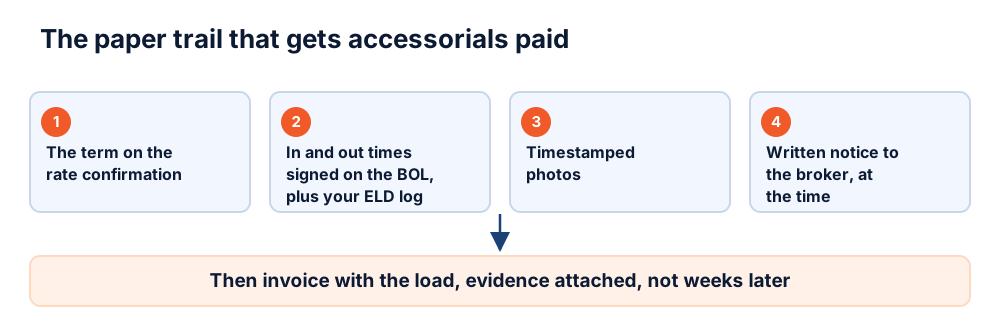
Every accessorial claim rests on the same four things: the term on the rate confirmation; the times, signed in and out on the bill of lading where you can, backed by your ELD record; timestamped photographs; and written notice to the broker at the time it happened. Collect them as you go, not afterwards. Then invoice accessorials with the load, not weeks later, with the evidence attached. A clean invoice gets paid; a vague one gets negotiated.
When it goes wrong
Ask for any refusal in writing, with the reason. If you believe a broker billed the shipper for detention or other charges that never reached you, federal rules give each party to a brokered transaction the right to review the broker’s record of it (49 CFR 371.3). And keep track of which brokers pay accessorials cleanly and which do not — that history is worth more than any single invoice, and it should shape who you book with. Chasing this paperwork is exactly what our billing and invoicing service exists to take off your hands.
This is the thinking behind billing & invoicing and broker negotiation — the same analysis, run for you every week instead of read about once.
It applies hardest to dry van freight and reefer freight and flatbed freight, where the margin is thin enough that the arithmetic decides the week.
Want this applied to your trucks instead of read about? Our dispatchers run this analysis on every account, every week. Book a free audit and we will run it on your last ten loads.